Home » News » Company News » Why a Middle East Coastal Pump Station Chose Rubber Duckbill Valves: A Case Study
Why a Middle East Coastal Pump Station Chose Rubber Duckbill Valves: A Case Study
2026.10.12
Quick Answer:
A coastal municipal pump station in the Middle East switched from cast iron flap gates to rubber duckbill valves because seawater, hydrogen sulfide, sand, and debris caused hinges to rust, valves to jam, and seals to fail. The rubber duckbill valve has no hinges or springs, opens with forward flow, closes automatically under backpressure, and allows solids to pass through. This makes it a corrosion-resistant, low-maintenance solution for seawater backflow prevention. Rubber expansion joints were also installed at pump outlets to absorb vibration and compensate for pipe movement.
This case study is based on an export project. The client name and exact location have been anonymized.
Customer Background: A Coastal City Facing Drainage Problems
The customer operates municipal stormwater and sewage pump stations in a coastal city in the Middle East. The region has short but intense rainy seasons. During high tide, seawater can back up into the discharge outfalls, causing flooding in low-lying areas.
The pump station originally used cast iron flap gates for backflow prevention. After several years of operation, three major problems appeared:
The flap gate hinges rusted in seawater and became difficult to open.
Hydrogen sulfide gas in sewage accelerated metal corrosion.
Sand and debris stuck to the sealing surface, preventing tight closure and allowing seawater backflow.
The customer found us through Google by searching for “rubber duckbill valve for pump station.” They needed a replacement that could resist corrosion, avoid jamming, and provide reliable backflow prevention.
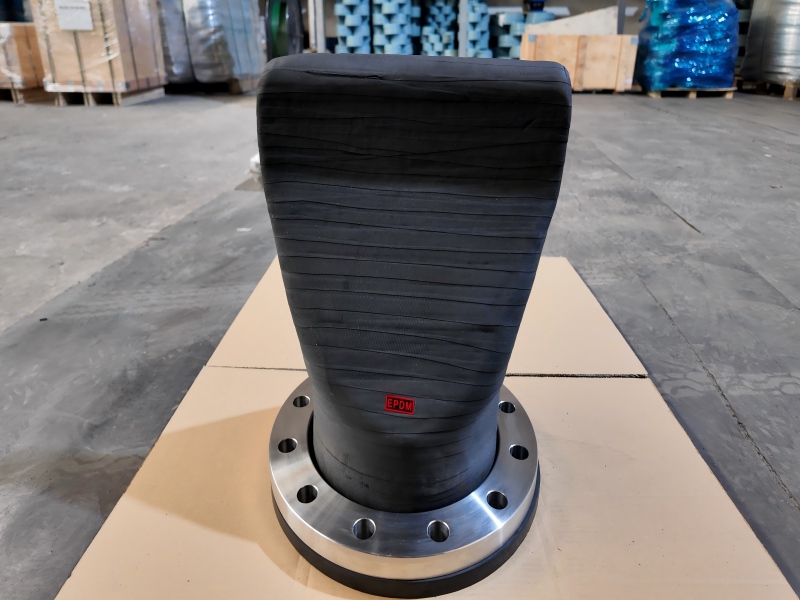
Rubber Duckbill Valve for Pump Station - Middle East Case Study
Operating Conditions: Why Flap Gates and Standard Check Valves Were Not Suitable
Item
Project Condition
Installation location
Stormwater and sewage pump station outlets
Media
Rainwater, sewage, seawater mixture, sand, and light debris
Pipe size
DN600
Reverse pressure
Tidal backpressure, approximately 0.3 MPa
Environment
Coastal salt spray, high humidity, hydrogen sulfide corrosion
Under these conditions, metal flap gates tend to rust and seize. Standard swing check valves can also be blocked by particles. The rubber duckbill valve offers a better solution.
Why Rubber Duckbill Valves Were Selected
1. 100% Rubber Construction Resists Seawater and Sewage Corrosion
The rubber duckbill valve is made of EPDM or neoprene rubber with fabric reinforcement. It does not require metal hinges or springs. In seawater, sewage, acid, alkali, and salt spray environments, rubber is more corrosion-resistant than cast iron or carbon steel. This reduces the risk of rust and seizure.
2. No Moving Parts to Jam
A duckbill valve has no hinge, no valve disc shaft, and no spring. It opens and closes through the elastic deformation of the rubber itself. This eliminates common flap gate problems such as rusted hinges, detached discs, and failed springs.
3. Forward Flow Opens It; Backpressure Closes It Automatically
When the pump discharges, forward water pressure opens the duckbill. When the pump stops or the tide rises, reverse pressure closes the rubber lips automatically. This creates a reliable reverse seal and helps prevent seawater and sewage backflow.
4. Very Low Opening Pressure: Opens at Approximately 0.01 m Water Head
The duckbill valve opens at a very low pressure, typically around 0.01 m water head. This makes it suitable for low-lift pump stations and stormwater outfalls without adding significant pipeline resistance.
5. Solids Pass Through Directly: Less Clogging
Sand, small stones, and fibrous materials can pass through the duckbill opening with the flow. Unlike metal check valves, there is no sealing surface where debris easily gets trapped. This is especially important for coastal pump stations with high sand content.
6. Virtually Maintenance-Free, Quiet, and Long-Lasting
With no mechanical moving parts, there is no need for frequent lubrication, spring replacement, or hinge repair. Under normal operating conditions, the rubber duckbill valve is virtually maintenance-free, quiet in operation, and has a long service life.
Supporting Rubber Expansion Joints: Solving Vibration and Pipe Displacement
In this project, rubber expansion joints were also installed at the pump station outlet piping. When pumps start and stop, they generate vibration and pipe displacement. Rubber expansion joints absorb vibration, compensate for thermal expansion and contraction, and correct installation deviations. They also protect the pump body and pipeline flanges.
The duckbill valve handles backflow prevention, while the rubber expansion joint handles vibration isolation and compensation. Together, they improve the overall stability of the pump station piping system.
A rubber duckbill valve is a type of check valve made entirely of rubber. Its shape resembles a duckbill. Forward water pressure opens the lips, while reverse flow or backpressure closes them to prevent backflow.
What applications are duckbill valves suitable for?
They are suitable for municipal flood control, stormwater pump stations, sewage pump stations, wastewater treatment plants, coastal outfalls, seawater backflow prevention, and media containing sand or solids.
Why can duckbill valves prevent seawater backflow?
When the tide rises, reverse pressure closes the rubber duckbill lips automatically. This creates a reverse seal that helps stop seawater from entering the pipeline.
Do duckbill valves require maintenance?
Under normal conditions, they are virtually maintenance-free. Periodic inspection is recommended to check for foreign objects trapped in the lips and to verify rubber aging. They do not require the frequent rust removal and lubrication needed by metal flap gates.
How do duckbill valves work with rubber expansion joints?
The duckbill valve is installed at the pipeline outlet or pump station discharge point. The rubber expansion joint is installed at the pump outlet or pipe connection. The expansion joint absorbs vibration and compensates for displacement, while the duckbill valve prevents backflow. Used together, they improve pump station piping stability.
How do I select a duckbill valve?
You need to provide: pipe size, media type, temperature, reverse pressure, installation location, and connection standard (DIN, ANSI, EN, JIS, etc.). We can recommend a flanged duckbill valve or slip-on duckbill valve based on your operating conditions.
Need Rubber Duckbill Valves or Matching Rubber Expansion Joints?
We are a manufacturer of rubber expansion joints and rubber duckbill valves. We support custom sizes from DN50 to DN2000. Flange standards include DIN, ANSI, EN, and JIS. Rubber materials include EPDM, neoprene, and NBR.
If you are looking for a pump station duckbill valve, a seawater backflow prevention solution, or matching flexible rubber expansion joints, contact us for a selection guide.
Call to Action: Tell us your pipe size, media, installation location, and reverse pressure. We will help you select the right model.