Home » News » Techology News » Why a Leading Steel Mill Switched to Ceramic-Lined Rubber Expansion Joints for Extreme Abrasion Control
Why a Leading Steel Mill Switched to Ceramic-Lined Rubber Expansion Joints for Extreme Abrasion Control
2025.12.22
Introduction In the demanding environment of a modern steel mill, every minute of downtime translates to thousands of dollars in lost revenue. Last year, a long-term client from a major steel production facility approached us with a recurring "headache": their standard rubber expansion joints were failing every 2 to 3 months. The culprit? The high-velocity abrasive slurry and iron ore particles that were literally "eating" through the rubber walls.
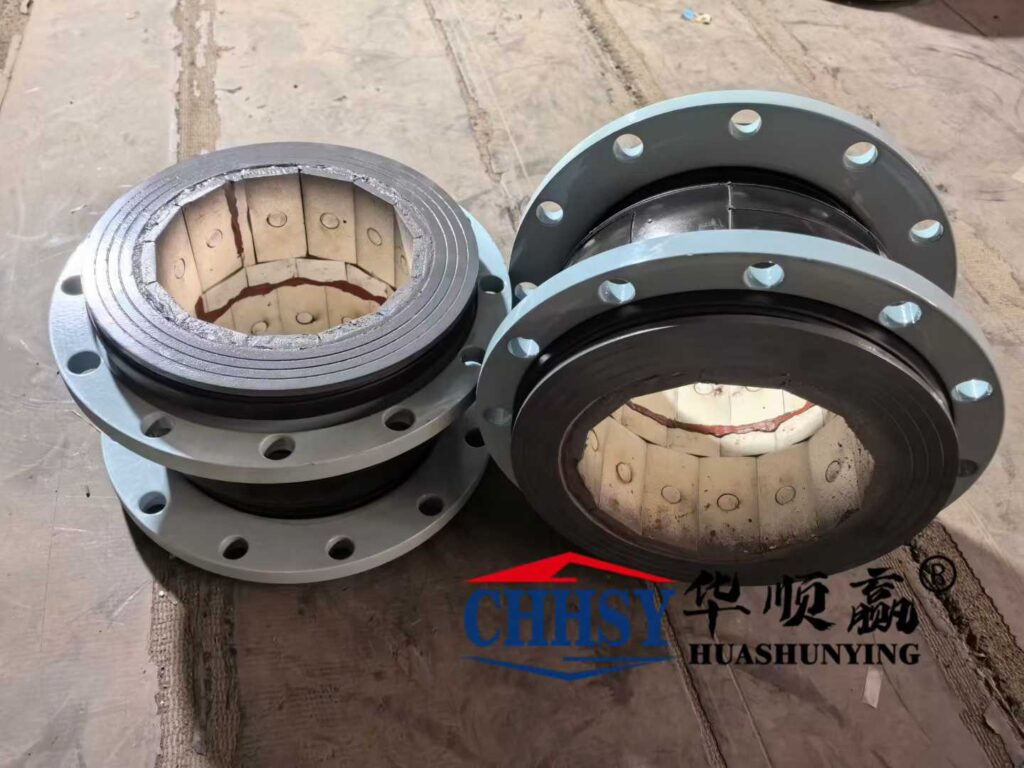
A custom-engineered Ceramic-Lined Rubber Expansion Joint designed for superior wear resistance in heavy industry applications.
The Challenge: The Limits of Standard Rubber The client’s pipeline was part of a critical de-dusting and slag transport system. While standard EPDM or Nitrile rubber joints provide excellent flexibility and vibration absorption, they are no match for the constant scouring of sharp, hard particles."
We are replacing joints more often than we are servicing the pumps," the plant manager told us during a site consultation. They needed a wear-resistant expansion joint that could handle the friction without sacrificing the flexibility required to protect their pumps and piping.
The Consultation: Proposing the Ceramic Solution Our engineering team conducted a thorough analysis of the medium’s flow rate and particle hardness. While the client initially considered upgrading to thicker rubber or metal bellows, we suggested a more innovative approach: the Ceramic-Lined Rubber Expansion Joint.
At first, the client was skeptical. "Isn't ceramic too brittle for a flexible joint?" they asked.
We explained our specialized manufacturing process: we embed high-alumina ceramic hexagonal tiles into the inner liner of the rubber joint using a high-strength vulcanization process. This design creates a "chain-mail" effect—the ceramic provides world-class abrasion resistance, while the rubber matrix maintains the necessary flexibility to absorb thermal expansion and equipment vibration.
The Pivot: Why Ceramic-Lined was the Right Choice After several technical discussions and a review of performance data, the client realized that a Ceramic-Lined Rubber Expansion Joint offered three distinct advantages for their steel mill piping solution:
Unmatched Abrasion Resistance: The ceramic lining is significantly harder than the iron ore slurry, extending the service life by 5 to 10 times compared to standard rubber.
Impact & Vibration Absorption: Unlike rigid ceramic-lined steel pipes, the rubber exterior dampens system shocks, protecting sensitive instruments.
Cost-Efficiency: While the initial capital expenditure reflects the premium quality of the materials, the significant reduction in maintenance frequency and the elimination of unplanned downtime delivered a total cost of ownership (TCO) advantage within the first six months.
The Result: 12 Months and Counting The client decided to trial our Ceramic-Lined Rubber Expansion Joints on their most problematic line. We are proud to report that 12 months later, the same joints are still in operation with zero signs of internal wear or leakage. The plant has since moved to replace all high-wear expansion joints across their facility with our ceramic-lined solution.
Conclusion For heavy industries like steel manufacturing, "standard" is often not enough. If your facility is struggling with frequent pipe failures due to erosion, a Ceramic-Lined Rubber Expansion Joint might be the game-changer you need.
Are you looking to optimize your piping system's lifespan? Contact our technical experts today to discuss how our wear-resistant expansion joints can save your operation time and money.